

If you’re shopping for a Maui condo with short-term rental income in mind, there’s one term you need to understand before you write an offer: the Minatoya List. It’s the single most important factor separating condos that can legally operate as vacation rentals from condos that can’t, and it’s reshaping the South and West Maui condo market in real time.
As a Maui real estate agent who works with vacation rental buyers every week, I get the same questions on nearly every showing: Is this unit on the Minatoya List? What does that even mean? Is it still safe to buy?
Below, I’ll break down exactly what the Minatoya List is, why it’s called that, how it affects vacation rental real estate today, where things stand with the county’s new legislation, and the specific questions you should ask before buying any condo you plan to use as a short-term rental.
What Is the Minatoya List?
The Minatoya List is an official county record of apartment-zoned condominium complexes on Maui that were granted the right to operate as short-term, or transient, vacation rentals even though their zoning is residential apartment (A-1 or A-2) rather than hotel zoning.
Under normal Maui County zoning rules, apartment-zoned buildings are meant for residential use, not nightly or weekly rentals. Hotel-zoned and resort-zoned buildings are the ones built and approved for transient guests. But back in the late 1980s and early 1990s, a large number of apartment-zoned condo buildings across Kihei, Wailea, Lahaina, Kaanapali, Napili, and Maalaea were already operating as de facto vacation rentals, often because they were built and marketed that way long before today’s zoning code was finalized.
To resolve the legal gray area, the county eventually drew a line: condo units that were already conducting transient vacation rentals before April 20, 1989, and that met a specific set of permitting criteria, were allowed to keep renting short-term going forward, even in apartment-zoned buildings. Everything else in apartment zoning was off-limits for nightly rentals. The properties that met the grandfather criteria became, collectively, the Minatoya List.
Why Is It Called the Minatoya List?
The list is named after the county attorney who provided the legal opinion concluding that condos meeting the 1989 criteria could legally be used for vacation rentals, and that attorney’s name was Richard Minatoya, then a Deputy Corporation Counsel for Maui County. His 2001 legal opinion established that certain condos in A-1 and A-2 apartment zoning could be grandfathered in because they were built before 1992 and were already operating as vacation rentals at the time the rule took effect.
The name stuck, and “Minatoya List” has become standard shorthand across Maui’s real estate, property management, and county planning communities. It is not a description of a neighborhood or a building style. It is purely a legal classification tied to one attorney’s opinion that later got written into the Maui County Code.
How the Minatoya List Shapes the Real Estate Market
For more than two decades, being on the Minatoya List was a quiet but significant value driver. Properties on the list historically carried a premium because they could legally be used as vacation rentals, unlike most apartment-zoned condos. Two condos could sit side by side, look nearly identical, and sell for very different prices simply because one was eligible for nightly rental income and the other was not.
This matters for sellers, too. Almost all of the demand for owning a Minatoya List property has historically come from vacation rental operators rather than owner-occupants, which is part of why these units have traded at a premium relative to comparable apartment-zoned condos that lack rental rights.
That dynamic is now shifting, and shifting fast.
Bill 9 and the Phase-Out: Where Things Stand in 2026
The Minatoya List has been at the center of one of Maui’s biggest housing policy fights of the last few years. In May 2024, Maui Mayor Richard Bissen proposed legislation targeting condos on the Minatoya List that would sunset their short-term rental rights, framing it as a way to convert thousands of vacation rental units back into housing for local residents in the wake of the 2023 Lahaina wildfires.
That proposal has since moved through the county process and become law. Bill 9 was passed by Maui County in December 2025, and it does phase out short-term rental rights for many Minatoya List properties, but the timeline ended up far longer than originally floated. The phase-out is scheduled to begin in 2029 for affected properties in West Maui and 2031 for the rest of Maui County. Current bookings and near-term travel plans are unaffected, and many legal vacation rentals, including all hotel-zoned and resort-zoned properties, remain completely untouched by the new law.
There’s also an important wrinkle for buyers and owners to watch. The county council has discussed Resolution 25-230, which would create new H-3 and H-4 hotel zoning districts, and if adopted this could allow as many as 4,500 of the Bill 9 impacted condos to continue operating as short-term rentals long-term. In other words, a meaningful share of Minatoya List condos may ultimately get a path to permanent rental rights through rezoning rather than losing them in 2029 or 2031. This is still developing, and anyone buying a Minatoya List property should track it closely.
Until the rezoning resolution is finalized one way or another, the practical reality looks like this:
- Minatoya List condos can still legally operate as short-term rentals today
- West Maui Minatoya properties are currently slated to lose STR rights starting in 2029
- The rest of Maui County’s Minatoya properties are currently slated to lose STR rights starting in 2031
- Hotel-zoned and resort-zoned condos are not affected by Bill 9 at all, regardless of location
- Some Minatoya properties may be rezoned into new hotel categories that preserve rental rights permanently
What the Current Market Data Tells Us About Minatoya Uncertainty
Maui’s condo market is currently repricing in real time, and the Minatoya phase-out appears to be part of the reason. Median sales price is down 21.7% and average sales price is down 18.3% year over year, while pending sales are up 31.6% even as closed sales fell 20.3%, a pattern that signals buyers stepping back in once sellers lower their asking prices rather than demand disappearing outright. Days on market is up nearly 11% while new listings have actually declined, suggesting sellers are pulling back because they don’t like current offers, not because the market is short on inventory.
This softness lines up with the inventory-price relationship UHERO identified when modeling the Minatoya phase-out: lower supply months have historically supported stronger price appreciation, and the looming 2029 and 2031 sunset dates appear to be adding caution to buyer demand for apartment-zoned, STR-eligible condos well ahead of any actual conversion. The practical takeaway is that buyers currently have real negotiating leverage on Minatoya List units, while properties with a more durable rental pathway, like hotel-zoned condos or non-Minatoya units such as Island Surf #311, are better positioned to hold their value through this uncertainty.
Below is a live report tracking median sale price on the 6-month rolling basis over the last three years.
What to Ask Before Buying a Condo for Short-Term Rental
If you’re evaluating a Maui condo for vacation rental income, run through this checklist before you fall in love with the lanai view.
1. Is the unit on the official Minatoya List, and can the listing agent confirm it with documentation?
Don’t take a listing description at its word. Ask for the official county confirmation, not just “vacation rentals permitted” language in the MLS remarks.
2. What is the building’s actual zoning designation?
Hotel-zoned (H-1, H-2) and resort-zoned condos are unaffected by Bill 9 and carry the most durable long-term rental rights on the island. Apartment-zoned (A-1, A-2) Minatoya properties carry a defined, dated phase-out risk.
3. If it’s on the Minatoya List, is it in West Maui or elsewhere?
The 2029 phase-out date applies to West Maui. The 2031 date applies to the rest of the county. That four-year difference matters enormously for your hold period and exit strategy.
4. Could this building be rezoned under Resolution 25-230 or a future H-3/H-4 designation?
Ask your agent to check whether the complex has been named in any rezoning discussions. This single factor could change a unit’s long-term value significantly.
5. What does the HOA or AOAO say about the building’s STR status and any pending litigation?
Some associations have pursued legal challenges or separate zoning applications. Request board minutes or management updates related to TVR status.
6. What’s the unit’s actual rental performance, not just its rental eligibility?
Ask for trailing twelve-month occupancy, average daily rate, and gross revenue from the current property manager. Legal eligibility to rent and strong rental performance are two different things.
7. What are the GET and TAT tax obligations, and is the unit currently licensed?
Vacation rental owners need a General Excise Tax license and a Transient Accommodation Tax license, and short-term rental units are typically taxed at a higher property tax classification than long-term residential units. Confirm the unit’s current licensing and tax classification before closing.
8. If the unit is not on the Minatoya List at all, why is it allowed to rent short-term?
Some units operate legally outside the Minatoya framework entirely, through hotel zoning, resort zoning, or other approved use categories. Understanding exactly which legal pathway applies to a specific unit is the difference between a confident purchase and a costly surprise.
Two Kihei Listings Worth a Closer Look
If you’re in the market for a Maui condo that’s ready to generate vacation rental income today, here are two current South Maui listings worth comparing side by side, since they sit on opposite sides of the Minatoya question.
Nani Kai Hale #402, 73 N Kihei Rd, Kihei, HI 96753 — Listing #406772
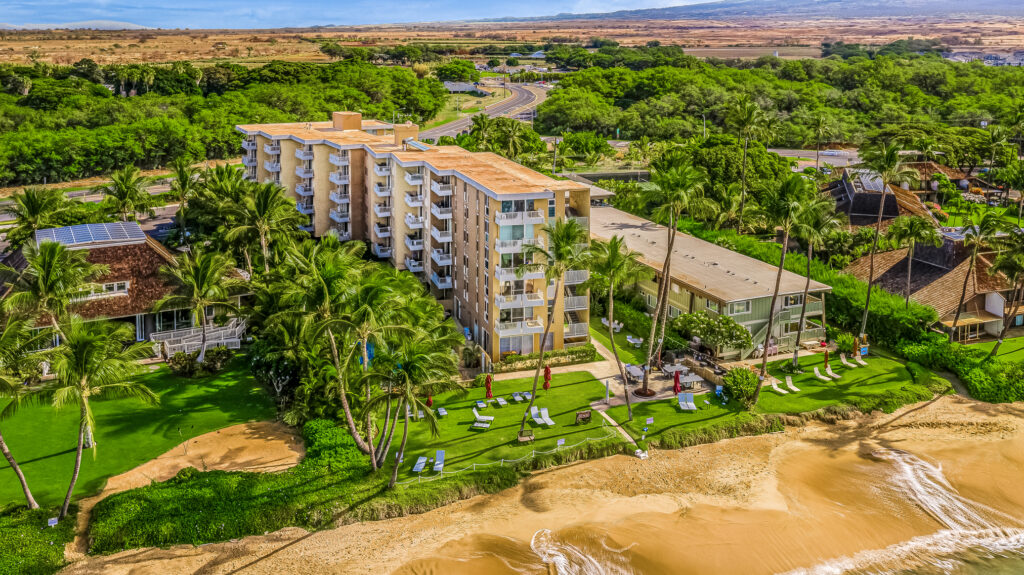
This unit sits in Nani Kai Hale, a beachfront complex directly on North Kihei’s Sugar Beach. Nani Kai Hale is a small, well-established oceanfront building that has long operated as a vacation rental community, with on-site management, a heated pool, and a beachside barbecue area just steps from the sand. For buyers drawn to a true beachfront setting in North Kihei with a strong rental track record, this is a compelling option, and we’ll walk you through the unit’s specific rental history and current zoning status so you know exactly where it stands.
Island Surf #311, 1993 S Kihei Rd, Kihei, HI 96753 — Listing #406773
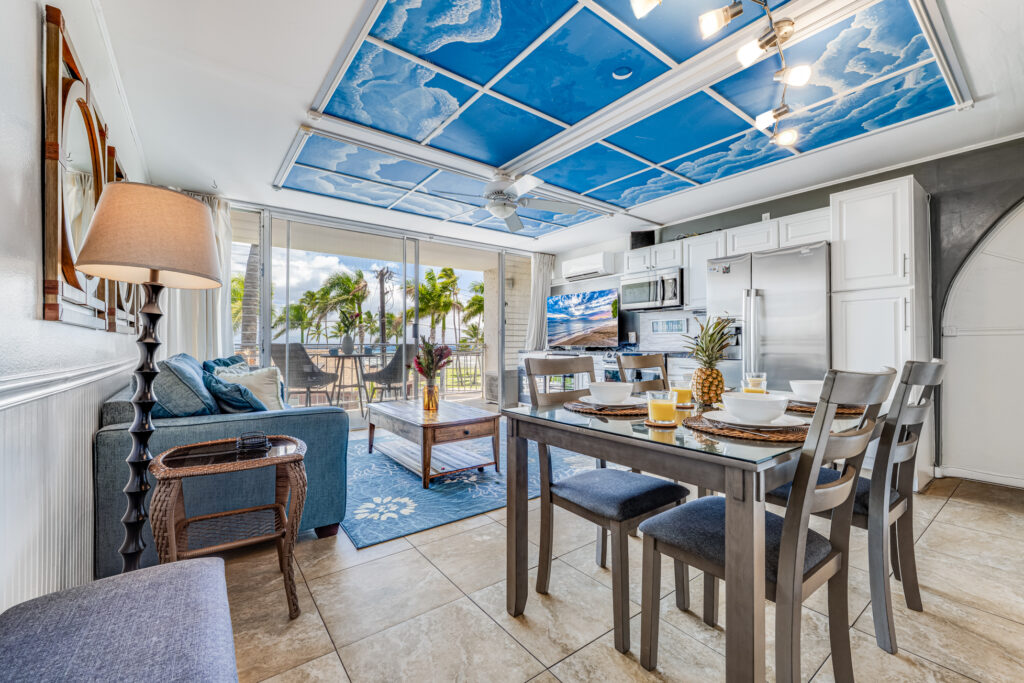
This is Island Surf #311, a beautifully remodeled 2-bedroom, 2-bathroom ocean view condo directly across from the Cove, one of South Maui’s most popular surf and paddleboard beaches. The unit features a flexible lock-off design that allows it to function as two separate rentals, a studio and a one-bedroom, or as a single two-bedroom rental, giving owners real flexibility to maximize income. The condo is currently operating as a vacation rental with strong bookings already in place, and importantly, this unit is not on the Minatoya List, which gives the building and unit greater long-term flexibility and confidence for continued short-term rental use. For buyers who want vacation rental income without the Minatoya phase-out timeline hanging over the investment, this is one of the more straightforward opportunities currently on the market in central Kihei.
Minatoya List: The Bottom Line
The Minatoya List isn’t going away as a concept, even as the policy details around it keep evolving. If you’re buying a Maui condo for vacation rental income, the single most important question you can ask is simple: what is this unit’s legal pathway to short-term rental rights, and how durable is it? Whether that answer is hotel zoning, Minatoya List eligibility with a known phase-out date, or a non-Minatoya designation like Island Surf #311, knowing the answer before you buy protects your investment and your peace of mind.
Have questions about a specific condo’s Minatoya status, zoning, or rental history? Reach out and I’ll help you get a clear, documented answer before you make an offer.
